
You start strong. New workout plan. Fresh motivation. Big goals. And then—somewhere between week two and week four—life happens. Energy dips, routines break, and the guilt of “falling off” creeps in. If that cycle feels familiar, you’re not alone. The real problem isn’t laziness or lack of discipline—it’s relying on intensity instead of sustainability. This guide is built on proven behavioral science and habit-formation principles, not empty “push harder” advice. You’ll learn a clear, practical framework to build positive fitness momentum that lasts—so your routine stops being a short burst of effort and becomes a sustainable part of your lifestyle.
Why Your Motivation Fades: The All-or-Nothing Trap
You start strong. New plan. New gear. Maybe even a fresh membership at your local strength club downtown. Then you miss one workout—and suddenly the whole week feels shot.
That’s the all-or-nothing trap.
It happens when goals are too ambitious and perfection is expected from day one. In behavioral psychology, this is called dichotomous thinking—seeing things in black-and-white extremes (American Psychological Association). You’re either “on track” or “a failure.” There’s no middle ground.
The real damage comes from what I call the catastrophic failure mindset. Miss Monday’s 6 a.m. barbell session? You tell yourself the program is ruined. (It’s not.) But your brain treats the slip like a total collapse, so you skip Tuesday too.
Momentum Moments fix this.
A Momentum Moment is a small, non-negotiable action that keeps the habit alive. Instead of ditching a 60-minute gym lift, commit to a 15-minute walk around your neighborhood or a 10-minute bodyweight circuit at home. The goal isn’t perfection—it’s continuity.
Research on habit formation shows consistency beats intensity for long-term adherence (Lally et al., 2010). That’s how you build positive fitness momentum.
If you want a deeper breakdown, read the psychology behind small wins in training progress.
Pro tip: On low-energy days, shrink the workout—never skip the ritual.
Laying the Groundwork: Your Fitness Fundamentals
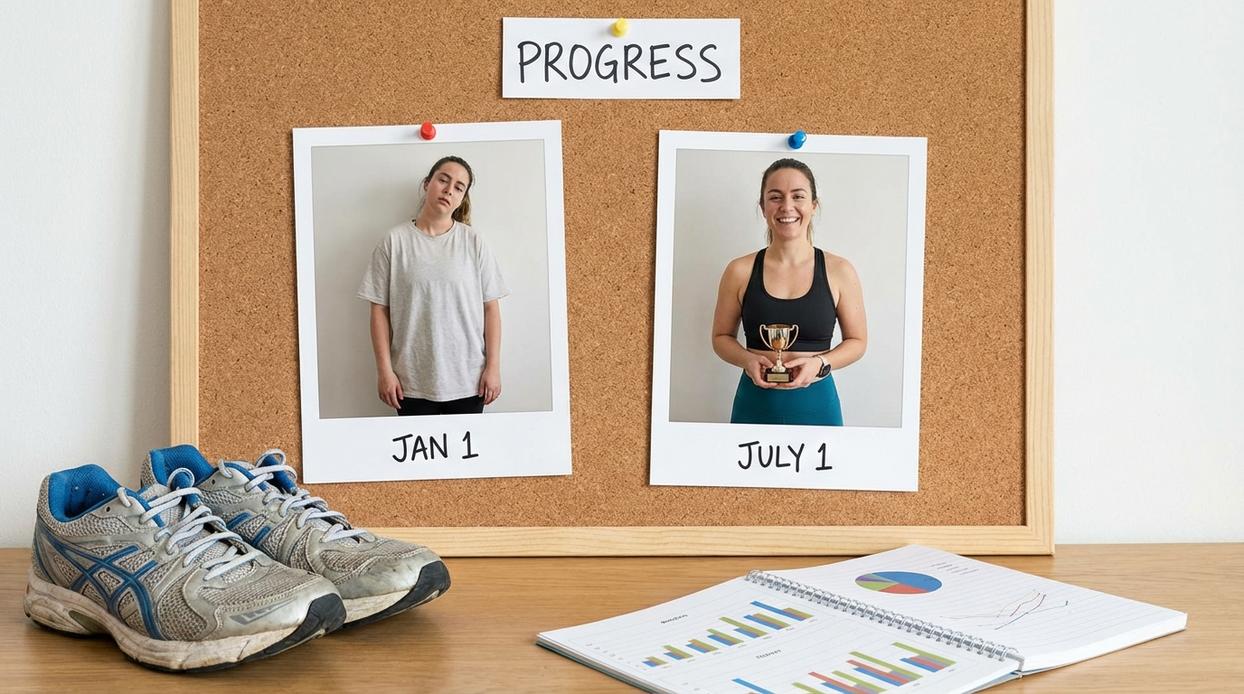
Before you chase advanced programs or trendy workouts, you need strong foundations. Think of this as building the frame of a house—without it, nothing else holds. The benefit? Less burnout, more consistency, and results that actually last.
Scheduling and Habit-Stacking
First, treat workouts like important appointments, not optional errands. When something is scheduled, it gets done. Even better, use habit-stacking—pairing a new habit with one you already do daily. For example: “After I brush my teeth in the morning, I will do 10 minutes of stretching.” This works because your brain loves patterns.
The payoff is simple: fewer skipped sessions and steady progress. Instead of relying on motivation (which comes and goes), you rely on structure.
Environment Design
Next, reduce friction. Environment design means setting up your space to make good choices easier than bad ones. Lay out workout clothes the night before. Keep dumbbells where you can see them. Pack your gym bag and leave it by the door.
- Visible equipment = visual reminder
- Prepared clothes = no morning debate
- Ready gym bag = zero excuses
Small tweaks like these create positive fitness momentum. (Yes, even on days when the couch is calling your name.)
The Two-Day Rule
Now, let’s talk consistency. The Two-Day Rule is simple: never miss more than one planned workout in a row. One missed day is life happening. Two starts a new habit—one you probably don’t want.
This rule protects your rhythm while allowing flexibility. You stay human, but you don’t spiral.
Finding Your ‘Why’ and ‘What’
Finally, choose activities you enjoy—or at least don’t dread. If you hate running, don’t force it because someone on social media swears by it. When your workouts align with your personal “why” (more energy, strength, confidence), showing up feels rewarding.
And that’s the real win: a routine you actually stick with.
Precision and Progress: Smarter Workouts, Not Harder Ones
There are two ways to approach fitness.
Option A: Exhaust yourself with long, grueling sessions that leave you sore, busy, and inconsistent.
Option B: Follow Precision Strength Protocols—structured, efficient workouts designed to deliver maximum return on effort.
Most people assume Option A builds grit. And to be fair, hard workouts can feel productive (sweat equals success, right?). But research shows consistency, not intensity spikes, drives long-term strength and health gains (American College of Sports Medicine).
The Power of a Simple Plan
A written 3-day full-body routine removes decision fatigue—the mental drain caused by too many choices. When you already know that Monday is squats, push-ups, and rows, you skip the “What should I do today?” spiral.
Clarity beats motivation.
Pro tip: Keep your plan visible—on your phone or fridge. If it’s hidden, it’s forgotten.
Daily Fitness Efficiency Hacks
Compare this:
- Isolation approach: Bicep curls, tricep kickbacks, calf raises—one muscle at a time.
- Compound approach: Squats, push-ups, rows—multiple muscle groups working together.
Compound exercises recruit more muscle fibers per movement, improving coordination and calorie expenditure in less time (NSCA Journal). Think of it as the difference between sending three separate emails versus one well-written group message.
Track Progress—Not Just Performance
Many quit because they only measure heavier weights or extra reps. That’s outcome tracking.
Instead, track behavior:
- Check off each completed session.
- Aim for streaks.
- Celebrate consistency.
Performance gains become the bonus, not the pressure.
Adaptive Planning Wins
Busy week? Option A skips entirely. Option B scales.
A 45-minute workout becomes a focused 20-minute circuit. Momentum stays intact. That small win fuels positive fitness momentum and reinforces identity.
Some argue shorter sessions “don’t count.” But consistency compounds. Three focused 20-minute workouts outperform one heroic Saturday burnout.
Smarter beats harder—every time.
Your Path to Unbreakable Fitness Consistency
You came here looking for consistency—and now you know it doesn’t come from perfection. It comes from progress. The real obstacle was never a lack of motivation; it was the all-or-nothing mindset that made every missed workout feel like failure. By focusing on small wins, smart planning, and psychology-backed habit building, you create positive fitness momentum that compounds over time.
This approach works because it’s sustainable. It removes pressure and replaces it with progress you can repeat.
Now take action: Choose one strategy from this guide—like the Two-Day Rule or a 15-minute Momentum Moment—and apply it starting today. Small action. Real consistency. Lasting results.