
If you’re searching for a smarter way to structure your workouts and finally see consistent strength and muscle gains, you’re in the right place. Many lifters hit plateaus not because they lack effort, but because they don’t fully understand how to program their training for long-term progress. This article breaks down the key differences in linear vs undulating periodization, showing you how each approach impacts strength development, muscle growth, recovery, and overall performance.
We’ll explore how structured progression, strategic variation, and intentional workload planning can transform scattered workouts into a results-driven system. Drawing from established strength science, practical coaching methodologies, and performance-based training principles, this guide translates complex programming concepts into clear, actionable steps.
By the end, you’ll know which model aligns with your goals, experience level, and recovery capacity—so you can train with purpose, avoid plateaus, and make every session count.
Choosing Your Path to Peak Strength
Ever hit a plateau and wondered if your program is the problem? linear vs undulating periodization sounds technical, but it’s simply about how you vary intensity and volume over time. Linear models progress steadily, like adding weight each week—great for beginners craving structure. Undulating plans shift loads more frequently, keeping advanced lifters adaptable and engaged. Which sounds like you? Do you thrive on predictability, or need variation to stay motivated? Some argue constant change risks fatigue, while others say straight-line progress stalls quickly. The best choice depends on your experience, recovery, and schedule.
The Foundation: Why Training Periodization is Non-Negotiable
At its core, periodization is the logical, systematic planning of training so you peak at the right time—not randomly, not accidentally. Think of it like studying for finals: you wouldn’t cram everything the night before (unless you enjoy chaos). Instead, you build up gradually.
The science behind this is the General Adaptation Syndrome (GAS)—a three-step cycle of stress, recovery, and supercompensation. First, you apply stress (a hard workout). Then, you recover. Finally, your body rebounds stronger than before. According to sports science research, properly timed recovery improves performance and reduces injury risk (Selye, 1956).
Without a plan, however, progress stalls. You either under-train (no stimulus) or overtrain (constant fatigue). That’s when injuries and burnout creep in.
So what should you do? Start by mapping 8–12 weeks. Choose between linear vs undulating periodization based on your goal. Next, schedule progressive overload weeks followed by lighter deloads. In other words, train hard—but recover harder.
The Linear Model: A Systematic March Towards a Single Goal
The linear model is the classic roadmap of strength training. You begin with high volume and low intensity (more reps, lighter weight), then gradually shift toward low volume and high intensity (fewer reps, heavier weight) over several weeks or months.
Here’s the traditional phase structure:
- Hypertrophy: High volume / Low intensity (e.g., 4–5 sets of 8–12 reps)
- Strength: Moderate volume / Moderate intensity (e.g., 3–5 sets of 4–6 reps)
- Power or Peaking: Low volume / High intensity (e.g., 3–4 sets of 1–3 reps)
Think of it like training for a marathon by first building mileage, then sharpening speed before race day. Each phase narrows your focus toward one clear outcome.
Why it works:
- Simple to program (ideal for beginners)
- Builds a strong base of muscle and work capacity
- Excellent for peaking at a single event, like a powerlifting meet
Pro tip: Keep detailed records during each phase—accurate data makes transitions smoother. If you’re unsure how, review tracking training volume for smarter strength gains.
But it’s not perfect. Critics argue it can become monotonous (week 9 can feel like Groundhog Day) and may cause minor detraining of qualities like endurance while strength peaks. This is where linear vs undulating periodization debates heat up.
Still, if your goal is one clear performance peak, the linear model remains a reliable, systematic march forward.
The Undulating Model: Dynamic Variation for Continuous Progress
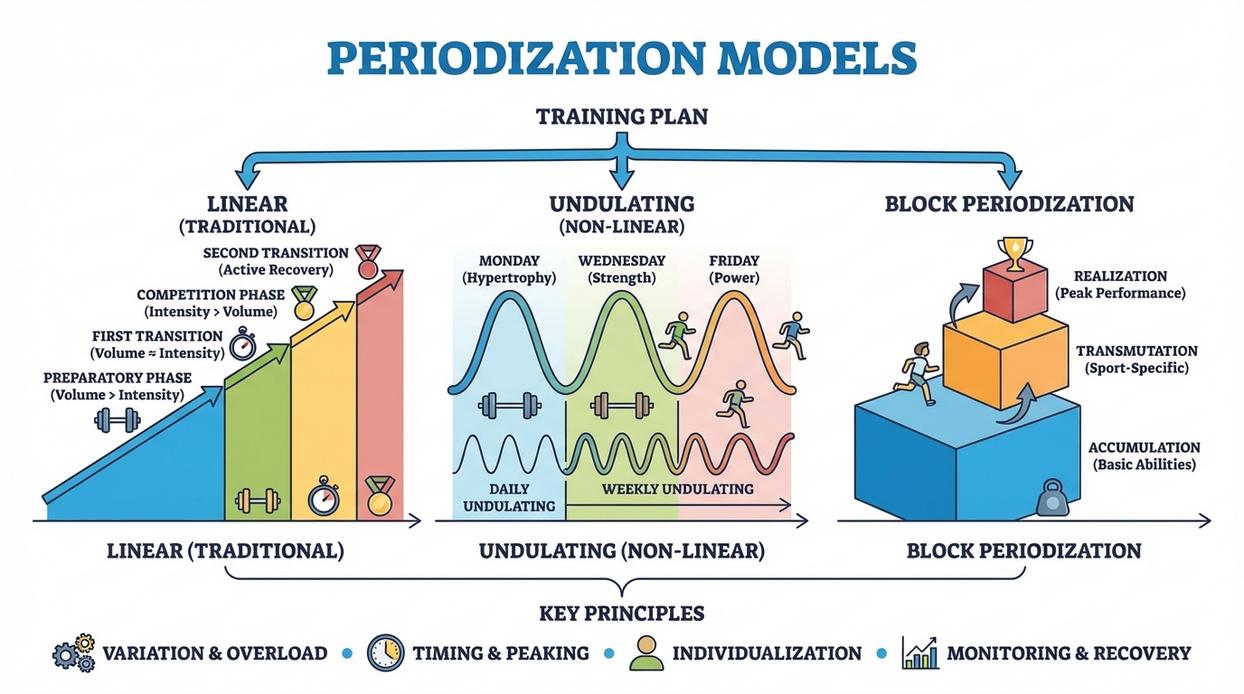
Have you ever wondered why some lifters seem to build strength, size, and explosiveness at the same time—while others plateau for months? The answer often comes down to variation. The undulating model rotates training volume (total work performed) and intensity (how heavy you lift relative to your max) frequently—either daily (Daily Undulating Periodization, or DUP) or weekly (WUP).
For example, a single DUP week might look like this: Day 1 (Strength: 5×5), Day 2 (Power: 8×3), Day 3 (Hypertrophy: 3×10). In other words, you’re not stuck grinding through the same rep ranges for weeks. Instead, your body adapts to multiple stimuli. Sound more engaging already?
Compared to linear vs undulating periodization, this model keeps intensity and volume in constant motion rather than steadily climbing toward one peak. Research suggests undulating approaches can improve strength outcomes in trained individuals due to varied neuromuscular demands (Schoenfeld et al., 2016).
Still, is more variation always better? Not necessarily. Designing DUP requires precision. Without careful recovery management, the risk of overtraining increases (think fatigue sneaking up like a plot twist you didn’t see coming). It’s also less ideal if you’re peaking for one specific event.
On the upside, it keeps training fresh and develops strength, power, and muscle simultaneously—especially useful during long competitive seasons. Pro tip: Track loads and recovery markers weekly to avoid burnout. After all, progress favors strategy, not randomness.
Practical Application: Matching the Protocol to the Athlete
Choosing the right structure isn’t about what’s trendy—it’s about what actually solves your current problem. In practice, linear vs undulating periodization serves different athletes at different stages.
For the Novice Lifter: Build the Base First
If you’re new to lifting, predictability is your best friend. A linear model—where intensity gradually increases while volume decreases—creates steady, measurable progress. More importantly, it reinforces technique under manageable loads. Think of it like learning chords before attempting a guitar solo. By repeating similar movement patterns weekly, you build neuromuscular efficiency (your brain-body connection) and foundational strength. That base reduces injury risk and sets you up for more complex programming later.
For the Intermediate or Advanced Athlete: Break the Plateau
However, progress eventually slows. The body adapts quickly, and repeating the same stimulus stops working (yes, even if you love your routine). An undulating model varies intensity and volume more frequently—often within the same week. This variation challenges multiple strength qualities at once and can reignite stalled gains. Research shows varied loading schemes improve strength development in trained individuals (ACSM, 2009).
For the In-Season Team Sport Athlete: Maintain Without Burning Out
During competition, you’re juggling strength, speed, and power. Undulating programming helps maintain these qualities simultaneously without excessive fatigue. Because each session has a distinct focus, it’s also practical when schedules shift unexpectedly. Pro tip: If games pile up, reduce volume—not intensity—to preserve performance.
Implementing your chosen strategy for maximum momentum means aligning action with intent. You now understand the core differences, benefits, and ideal applications for both linear vs undulating periodization. Still, knowledge alone won’t build strength. The real issue isn’t effort; it’s mismatch.
In a linear model, progression climbs predictably week to week. In an undulating model, intensity and volume shift more frequently. One favors steady ramps; the other thrives on variation. Neither is “better” universally—only better for specific goals.
So, audit your experience and objective. Then apply the right roadmap with confidence (and patience). For a deeper setup guide, review Precision Strength Protocols.
Build a Smarter Strength Plan That Actually Delivers
You came here to finally understand how periodization works and whether linear vs undulating periodization is right for your training goals. Now you have the clarity to see how structured progression eliminates plateaus, maximizes strength gains, and keeps your workouts intentional instead of random.
The real pain point isn’t effort — it’s wasted effort. Training hard without a structured progression model leads to stalled lifts, burnout, and frustration. A properly designed periodized plan ensures every session moves you closer to measurable strength, performance, and physique improvements.
Now it’s time to apply what you’ve learned. Choose the model that aligns with your goals, map out your next 8–12 weeks with clear progression, and track your lifts with precision. If you’re serious about building strength efficiently and want proven systems trusted by performance-driven lifters, start implementing a structured protocol today and commit to it fully.
Your progress accelerates when your training has purpose. Take action now and turn your next training block into your strongest one yet.