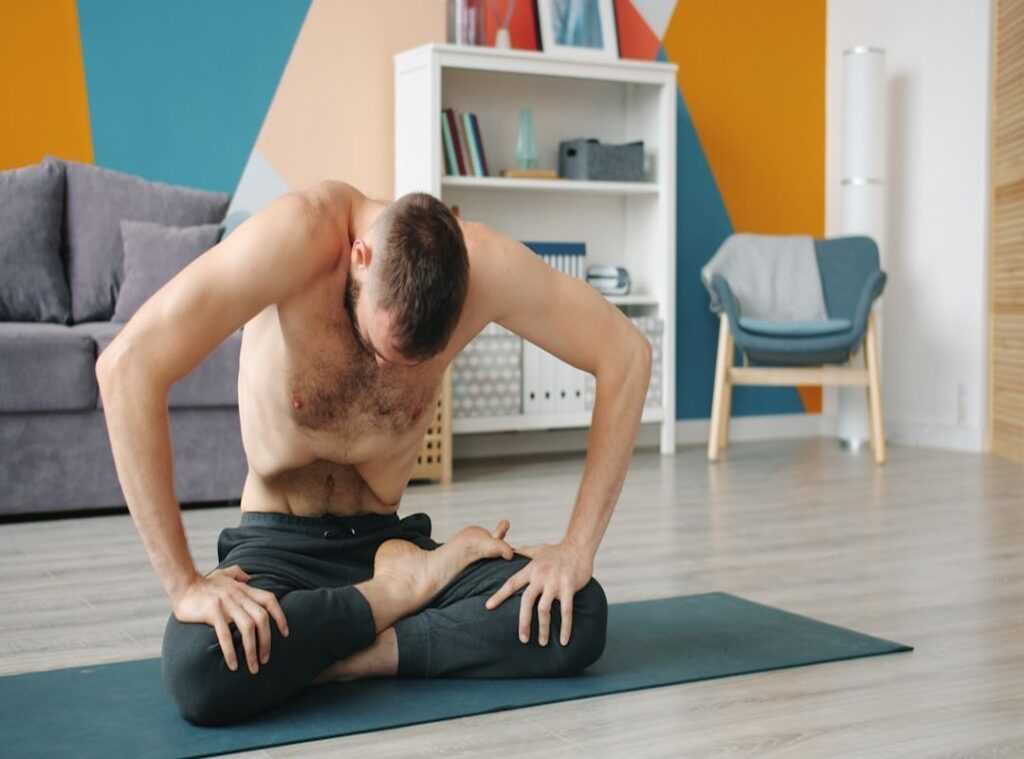
Ever feel so scattered and tense you can’t think straight? It’s like your mind’s running wild, and your body’s stuck in stress mode. We hear it all the time: “Take a deep breath.” What does that even mean without a plan?
Honestly, it’s like owning a sports car without the keys. Frustrating, right? mindful breathing techniques come in. It’s not just some airy-fairy advice.
Elite performance science backs this up.
When you master your internal state, everything changes. You gain control over your focus and calm, even accelerate recovery when you need it most. This isn’t just theory.
I’m sharing specific, science-backed practices that act like a control panel for your nervous system. Stick around, and I’ll show you how to become the master of your own state.
The Science of Your Breath: Control Your Body’s Built-In System
Ever feel like you’re stuck in overdrive? Your autonomic nervous system (ANS) might have something to do with it. The ANS is your body’s control system, handling all the stuff you don’t think about (like) breathing and heartbeat.
Two key players here: the Sympathetic (your fight-or-flight gas pedal) and the Parasympathetic (the rest-and-digest brake pedal).
But here’s the kicker: modern life often keeps our gas pedal down. Constant stress, poor focus, burnout. Sound familiar?
It’s like driving with the pedal floored and forgetting there’s a brake. It’s exhausting.
Enter mindful breathing techniques. You can’t consciously change your heart rate, but you can control your breathing. This is your manual override for the ANS.
Slow, intentional breaths tell your system it’s okay to take a breather (pun intended).
The Vagus Nerve. Think of it as a superhighway connecting your brain and body. Responds well to this.
Slow exhales activate the Parasympathetic branch, tapping the brakes on stress. It’s a solid, natural way to regain control.
Pro tip: integrate this into your daily routine. Ever tried Integrating Yoga Daily Routine? It’s a great way to incorporate mindful breathing into your day.
Your body will thank you for it. We’re not just talking about relaxation. This is about reclaiming your focus, reducing burnout, and finding balance.
Give it a shot. You’ll wonder why you didn’t start sooner.
Breathe Like a SEAL: Master Box Breathing
Ever feel like your brain’s in overdrive and desperately needs a reset? Enter Box Breathing. This technique isn’t just a random trend; it’s the secret sauce for Navy SEALs and elite athletes who thrive under pressure.
Sounds intense, right? But it’s surprisingly simple and effective.
Here’s how it works: Inhale through your nose for a 4-count. Hold that breath for another 4-count. Exhale fully through your mouth for a 4-count.
Then, hold your breath out for a final 4-count. Repeat. The whole cycle takes only 16 seconds.
You can do this anywhere, anytime.
Why does it work? The symmetrical breathing pattern balances your nervous system. It keeps the ‘gas’ and ‘brake’ pedals of your body in check.
Those brief pauses when holding your breath build CO2 tolerance, scientifically linked to better stress resilience and sharper mental focus. It’s like giving your brain a reset button.
You can use Box Breathing for all kinds of high-stakes moments. Try it before a key meeting, right before a major lift at the gym, or when you need to dive into deep work. This isn’t just about reducing stress; it’s about building a fortress of focus.
And if you’re curious about other mindful breathing techniques, there’s a wealth of resources out there. But trust me, mastering Box Breathing is a solid start.
Got two minutes? Then you’ve got time to transform your mental state. Give it a shot and watch your focus sharpen like never before.
Rapid Reset: The Physiological Sigh for Stress Dissipation
Ever feel like stress is about to steamroll you? There’s a trick I swear by: the Rapid Reset technique. It’s a mindful breathing technique backed by science.
You simply take a double inhale through your nose (one big, then a smaller one without exhaling) and follow it with a long exhale through your mouth.
Why does this work? The double inhale opens up your alveoli (tiny) air sacs in the lungs (maximizing) the surface area for off-loading carbon dioxide. This is key since carbon dioxide is a major trigger for stress.
When you exhale slowly, it activates the parasympathetic “calm” signal. This isn’t just theory. Neurobiologists like Andrew Huberman at Stanford have highlighted its effectiveness.
Picture this: you’re hit by a frustrating email. Instead of smashing your keyboard, try this. Or maybe post-workout, when you’re still jittery, use it to dial down and kickstart recovery.
We all need these quick resets in our daily habits for improved mental wellbeing. It’s not just about surviving the day; it’s about thriving. For more on daily habits improved mental wellbeing, check this out.
This technique can be your game changer. So, why not give it a shot?
The ‘Pre-Sleep’ Drill: 4-7-8 Breathing to Power Down Your Mind
You know that moment when you’re lying in bed, absolutely exhausted, but your mind won’t cooperate? I’ve been there too. The 4-7-8 breathing technique is a game-changer (it’s) like a natural tranquilizer for the nervous system.

This isn’t just a gimmick. It’s one of those mindful breathing techniques that really works.
Here’s how you do it. First, exhale completely through your mouth. Then, close your mouth and inhale slowly through your nose for a count of four.
After that, hold your breath for a count of seven. Finally, exhale completely through your mouth, making a whoosh sound, for a count of eight. It’s deceptively simple, right?
The magic isn’t just in the counting, though. The extended exhale sends a solid signal to the Vagus nerve, nudging your body into a relaxed state. It’s all about calming that racing mind so you can actually drift off to sleep.
It’s hard to argue with biology.
My advice? Try running through 3-4 cycles while you’re lying in bed. Let your body know it’s time to shut down and recover.
This isn’t a one-time fix, but with some practice, it becomes second nature. So, does this sound like something you might try? You won’t regret it.
Building Momentum: Breathwork in Daily Life
Consistency beats intensity. Always. I know the grind of trying to make something a habit, especially when it feels like you’re juggling flaming swords (okay, maybe not that extreme).
But the trick? Integrate mindful breathing techniques with your daily routine.
Ever heard of “habit stacking”? It’s a game-changer. Before you dive into your morning coffee ritual, try five rounds of Box Breathing.
It’s simple: inhale for four, hold for four, exhale for four, hold for four. Or when you shut down your laptop , perform three Physiological Sighs. Trust me, your brain will thank you.
Start easy. Pick one technique. Practice for two minutes, twice daily.
Just one week. You’ll see (and feel) the difference. It’s all about building an unconscious competence.
The more you practice when calm, the stronger you’ll be when life gets chaotic. Remember Yoda? “Do or do not. There is no try.” Wise words.
Breathe Life Back into Your Power
Feeling powerless? I get it. But you’ve got the answer within you. Mindful breathing techniques are your hidden strength.
No fancy gadgets. Just you, mastering your breath. You’ve got Box Breathing for focus, the Physiological Sigh to cut stress fast, and 4-7-8 for deep relaxation.
It’s right there, ready for you. Don’t just read and move on. Pick one technique.
Try three cycles right now. Feel that? That’s you taking control.
Your next breath starts your momentum. So, don’t stop here. Dive into it.
Your life waits. Your power is just a breath away. Try it now.