
If you’re looking to build strength, improve endurance, and create a fitness routine that actually fits into your daily life, you’re in the right place. This article breaks down the core principles behind Momentum Moments, Zlase Fitness Fundamentals, Sudenzlase Wellness Routines, Precision Strength Protocols, and Daily Fitness Efficiency Hacks—so you can train smarter, not longer.
Many people struggle with inconsistent workouts, burnout, or routines that feel overly complicated. Here, you’ll discover streamlined strategies designed to maximize results while protecting your energy and recovery. From efficient strength-building frameworks to sustainable habit stacking, every section is built to help you move forward with clarity and confidence.
We’ve drawn on established exercise science, performance research, and proven conditioning methodologies to ensure the guidance is practical, safe, and results-driven. You’ll also learn how to integrate recovery tools—like breathing techniques for stress—to enhance focus, resilience, and overall performance.
If your goal is consistent progress without wasted effort, this guide will show you exactly where to start and how to keep going.
Modern life often feels like a browser with 47 tabs open—constant notifications, endless demands, zero pause. That sense of overwhelm isn’t weakness; it’s biology. Chronic stress keeps your nervous system locked in fight-or-flight, flooding you with cortisol and impairing focus, sleep, and immunity (American Psychological Association). The good news? You can take back control.
Controlled breathing isn’t a trendy hack. It’s a direct lever on your vagus nerve, shifting you into rest-and-digest mode.
Use breathing techniques for stress to:
- Lower heart rate and blood pressure
- Sharpen mental clarity
- Recover faster after pressure
The payoff is simple: calm body, clear mind, better performance.
The Autonomic Nervous System (ANS) is your body’s automatic control center, regulating heart rate, digestion, and breathing without conscious effort. It has two main branches. First, the Sympathetic nervous system—often called the fight-or-flight response—revs you up during stress, flooding the body with adrenaline and increasing heart rate. In contrast, the Parasympathetic system, known as rest-and-digest, slows things down and restores balance.
Research shows slow, controlled exhalations directly stimulate the vagus nerve, the primary pathway activating the Parasympathetic system (Harvard Health Publishing, 2020). As a result, heart rate drops and blood pressure stabilizes. In fact, a 2017 Frontiers in Psychology study found paced breathing significantly reduced anxiety levels in participants.
So while stress can feel automatic, the switch works both ways. By practicing breathing techniques for stress and extending each exhale, you manually signal safety to your brain. In other words, calm isn’t luck—it’s physiology you can control. Right now, anytime.
Technique 1: The 4-7-8 Breath for Rapid Relaxation
Back in 2019, when sleep trackers started going mainstream, many people realized how stressed they actually were at night. That’s when the 4-7-8 breath began trending as a powerful, natural tranquilizer for the nervous system. Unlike complicated meditation routines, this method works fast—often within a minute or two (yes, really).
Here’s how to do it:
- Exhale completely through your mouth.
- Inhale quietly through your nose for 4 seconds.
- Hold your breath for 7 seconds.
- Exhale audibly through your mouth for 8 seconds.
That 4-7-8 ratio isn’t random. The extended exhale is the key. It activates the parasympathetic nervous system—often called the “rest-and-digest” response—which lowers heart rate and signals safety to the body (Harvard Health Publishing notes slow breathing supports vagal tone and relaxation response).
Some critics argue that breathing patterns are overhyped compared to exercise or therapy. Fair. But breathing techniques for stress are immediate, free, and accessible anywhere—no gym bag required.
Practical tips:
- Start with just four cycles.
- Sit comfortably with your spine upright.
- Focus on the sensation of air moving in and out.
Pro tip: Practice daily for two weeks before judging results. Consistency compounds.
Technique 2: Box Breathing for Focus and Composure
I used to think staying calm meant zoning out. Before high-stakes meetings, I’d take deep, dramatic breaths and hope the nerves disappeared. They didn’t. Instead, I felt lightheaded and distracted. That’s when I discovered box breathing—a simple, structured method elite performers, from Navy SEALs to pro athletes, rely on to stay sharp under pressure (and no, you don’t need a uniform).
Here’s how it works: Inhale for a 4-count, hold your breath for a 4-count, exhale for a 4-count, and hold the breath out for a 4-count. That’s one round. As you breathe, imagine drawing a box: one side for each phase. The visualization keeps your mind anchored, so it doesn’t spiral into worst-case scenarios.
At first, I rushed the counts and skipped the final hold. Big mistake. The power lies in the symmetry. Now, I use it before difficult conversations, during high-pressure tasks, or to reset focus in a chaotic afternoon. Unlike other breathing techniques for stress, box breathing keeps you alert instead of drowsy.
If you’re building a steady practice, pair it with your existing routine—like learning how to design a morning wellness routine that actually sticks for consistency daily.
Technique 3: Foundational Belly Breathing for Deeper Calm
Have you ever noticed your shoulders creeping up toward your ears while you work? Or felt your chest tighten during a stressful email? That’s shallow “chest breathing” at play—a pattern where the upper lungs do most of the work, quietly keeping your body in a low-grade stress state. (It’s like idling your car engine all day.)
Diaphragmatic breathing—often called belly breathing—uses the diaphragm, a dome-shaped muscle beneath your lungs. When it contracts, your belly expands, drawing air deeply and efficiently. This is how babies breathe naturally. Somewhere along the way, many of us forget.
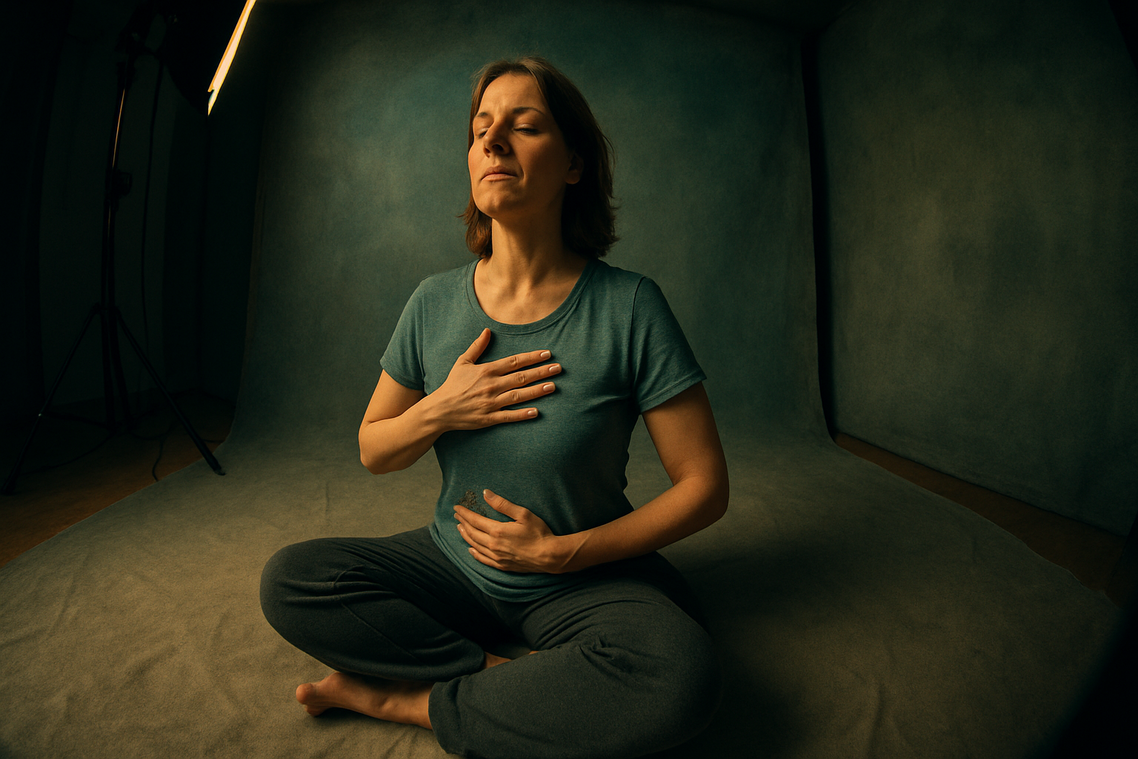
Try this: Lie down. Place one hand on your chest and one on your belly. Inhale slowly through your nose. The belly hand should rise; the chest hand stays relatively still. Exhale gently. Simple, right?
This is the foundation. Master it, and all other breathing techniques for stress become more effective. If your breath is shallow, how can your calm be deep?
Making It Stick: Weaving Breathing into Your Daily Rhythm
Most people ask, “What’s the best technique?” A better question is when will you use it?
A client once told me, “I don’t forget to drink coffee—so I guess I shouldn’t forget to breathe either.” Exactly. That’s habit stacking: attach Box Breathing to your morning brew. When the kettle clicks on, you begin.
Another student said, “Traffic makes me furious.” Perfect trigger. Red light? Three belly breaths. Phone buzz? Pause before you read.
These breathing techniques for stress work best when tied to life already happening.
Try the Two-Minute Reset. Between meetings, set a timer and inhale slowly. As one executive put it, “Two minutes saves me from two hours of tension.”
| Trigger | Action |
|---|---|
| Coffee brewing | Box Breathing |
| Red light | 3 deep breaths |
| Meeting ends | 2-minute reset |
Consistency beats intensity.
Your First Step to Conscious Calm
You now have a simple, portable toolkit for steadying your mind anytime, anywhere. In other words, even when traffic jams, deadlines, or family chaos flare up, your response is yours. That’s the core idea: while stressors happen outside you, your breath happens within you. By using breathing techniques for stress, you shift from automatic reaction to conscious choice. So start small—pick one method and practice for three minutes today.
Incorporating effective breathing techniques can be transformative for managing stress and enhancing performance, much like understanding the implications of Bikimsum on blood pressure can impact your overall well-being – for more details, check out our Does Bikimsum Increase Blood Pressure.
Build Strength, Control Stress, and Move With Purpose
You came here looking for a smarter way to train, recover, and stay consistent without burning out. Now you have the tools to create momentum through focused workouts, structured routines, and practical efficiency hacks that fit real life.
The real challenge was never motivation — it was overwhelm. Too many programs demand more time, more intensity, and more energy than you can realistically give. By applying Momentum Moments, Zlase Fitness Fundamentals, and Precision Strength Protocols — along with breathing techniques for stress — you reduce mental load while increasing physical results. That’s how sustainable progress is built.
Your next move is simple: choose one protocol, schedule it into your week, and commit to executing it with precision. Don’t wait for perfect conditions — start with what you can control today.
If you’re tired of inconsistent results and want a proven, structured approach that maximizes performance without wasting time, take action now. Join the growing community using these systems to train smarter, recover faster, and build lasting strength. Start today and turn your daily effort into measurable progress.