
If you’re looking to build strength, boost energy, and create a fitness routine that actually fits into your daily life, you’re in the right place. Too many people jump between trends, workouts, and advice without a clear system—leading to stalled progress and frustration. This article is designed to cut through the noise.
We’ll break down practical strategies rooted in Momentum Moments, Zlase Fitness Fundamentals, Sudenzlase Wellness Routines, Precision Strength Protocols, and Daily Fitness Efficiency Hacks—so you can train smarter, not longer. Whether your goal is muscle growth, improved endurance, or sustainable wellness, the focus remains the same: consistency, efficiency, and proper exercise form.
Our guidance is built on proven training principles, performance-focused structure, and real-world application. You’ll walk away with actionable steps you can implement immediately—no fluff, no extremes—just clear methods to help you move better, recover smarter, and see measurable progress.
The Unbreakable Foundation: Core Principles of Efficient Movement
Strength isn’t built on heavy weights alone. It’s built on principles that protect your body while maximizing results (yes, even if you’re chasing superhero-level gains).
1. Spinal Integrity & Bracing
A neutral spine means maintaining the natural curve of your back—no excessive rounding or arching. To support it, create intra-abdominal pressure by breathing deep into your belly and tightening your core as if preparing for a light punch. This internal pressure stabilizes your spine during lifts like squats or deadlifts. Use proper exercise form. Wondering what’s next? Practice bracing during everyday movements—picking up groceries counts.
2. Controlled Tempo
Every rep has two phases: eccentric (lowering) and concentric (lifting). Slowing the eccentric phase increases muscle tension, a key driver of growth (Schoenfeld, 2010). Speed can impress, but control builds strength.
3. Full Range of Motion
Working through a complete, safe joint range enhances muscle development and reduces injury risk (American Council on Exercise). Half reps deliver half results.
4. Mind-Muscle Connection
Shift focus from moving weight to contracting muscle.
- Slow down.
- Lighten the load.
- Pause briefly at peak contraction.
Feel the muscle working. That awareness transforms effort into progress.
Harnessing the “Momentum Moment”: Power vs. Poor Form
Let’s clear something up first. Momentum isn’t the villain. Sloppy momentum is.
When I talk about a Momentum Moment, I mean a deliberate, explosive transfer of force from a stable base. In plain terms: you create tension, then release power with intention. That’s very different from jerking, swinging wildly, or bouncing just to finish a rep (we’ve all seen that guy).
Some argue momentum should never be used in strength training. I disagree. Used intelligently, it’s athletic. Used carelessly, it’s a shortcut to injury.
Take the kettlebell swing. Many beginners lift with their arms. But the real power comes from a hip hinge—driving through the glutes and snapping the hips forward. The arms simply guide the bell. That hinge is a controlled Momentum Moment, grounded in proper exercise form.
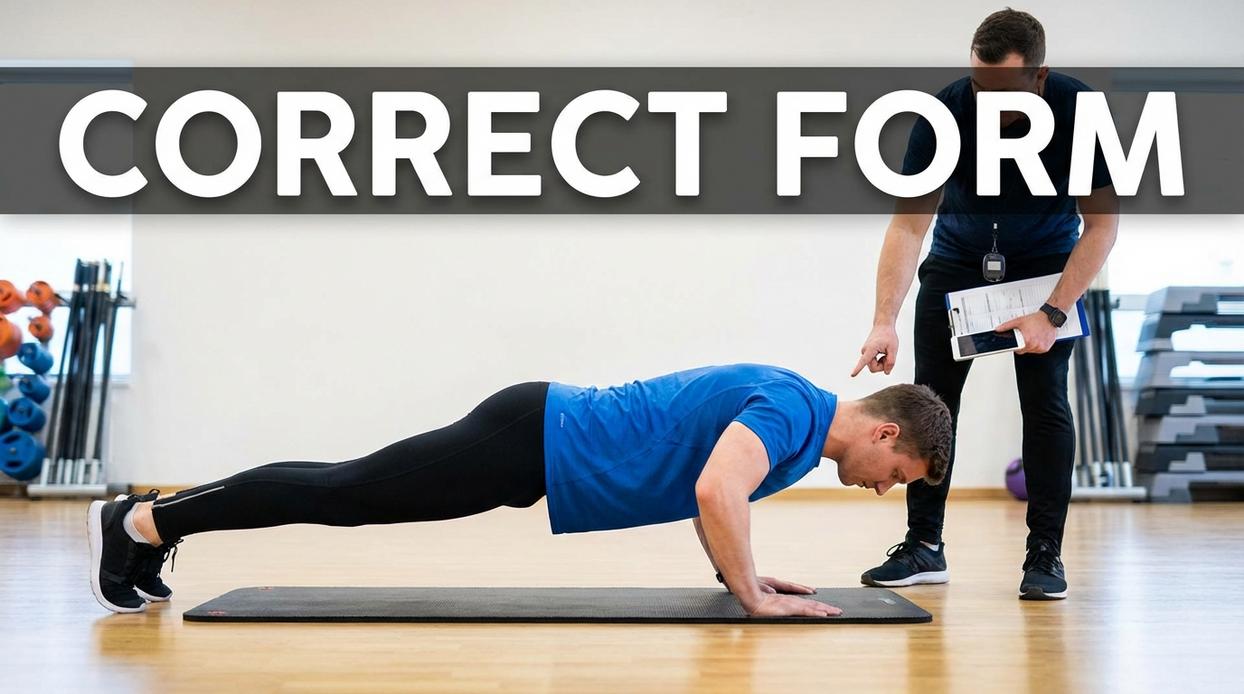
Now consider the push-up. “Bouncing” your chest off the floor is cheating. Instead, pause briefly at the bottom, stay braced, and press explosively. That force comes from tension built through the hands, core, and shoulders—not a rebound.
So how do you tell the difference? If you lose alignment, control, or balance, you’re cheating. If you feel stable before you explode, you’re generating power. That distinction sits at the core of the core pillars of a balanced fitness program.
Applying Precision Strength Protocols to Foundational Lifts
Precision Strength Protocols turn every lift into a repeatable system instead of a guessing game. The framework is simple: Setup, Execution, Reset. Setup positions your body for success. Execution is the controlled action of the movement. Reset prepares you to repeat the rep with the same quality.
Why does this matter? Because consistency builds strength faster than intensity alone. When each rep looks the same, your nervous system learns the pattern efficiently (and your joints will thank you).
Some lifters argue that strict protocols make training feel robotic. They prefer to “just move.” There’s truth there—training should feel athletic. But without structure, small form leaks compound over time, limiting progress and increasing injury risk. Precision doesn’t restrict you; it unlocks better results.
Protocol 1: The Goblet Squat
Setup
- Feet shoulder-width apart, holding the dumbbell at chest level, core braced.
Execution
- Initiate by sending hips back, keeping chest up, descending until elbows touch knees.
Ascent
- Drive through the mid-foot, maintaining an upright torso.
Benefit: Better quad and glute engagement, improved posture, and safer depth mechanics. Pro tip: Think “spread the floor” with your feet to create stability.
Protocol 2: The Dumbbell Overhead Press
Setup
- Dumbbells at shoulder height, palms forward, glutes and core tight.
Execution
- Press directly overhead until arms are fully extended, avoiding excessive back arch.
Descent
- Control the weight back down to the starting shoulder position.
Benefit: Stronger shoulders, improved core stability, and reduced lower-back strain.
How to Create Your Own Protocols
For any exercise, ask:
- What exact position maximizes stability?
- What joint path ensures efficient force?
- How will I reset before the next rep?
Break movements into clear cues, repeat them consistently, and track what improves. The payoff? Faster strength gains, fewer plateaus, and workouts that feel intentional instead of random. Isn’t that the point?
Daily Fitness Efficiency Hacks
In serious training spaces—from boutique studios in Shoreditch to old-school warehouse gyms—details matter. Try these:
- The Video Audit: Film a side-angle set. What feels smooth often shows knee cave or bar drift (the camera doesn’t lie).
- The Technique Warm-Up: Use an empty bar, moving painfully slow, rehearsing proper exercise form like a drill sergeant.
- The Single-Cue Focus: Pick one cue—“chest up” or “knees out”—for the entire session.
Some argue this overcomplicates lifting. Fair. But mastery lives in micro-adjustments (ask any Olympic coach in Colorado Springs). Pro tip: review footage between sets, not post-workout.
Build Momentum That Lasts
You came here because you’re tired of inconsistent results, wasted workouts, and routines that don’t move the needle. Now you understand how Momentum Moments, Zlase Fitness Fundamentals, Sudenzlase Wellness Routines, Precision Strength Protocols, and Daily Fitness Efficiency Hacks work together to create real, measurable progress.
The biggest pain point isn’t effort — it’s direction. Without structure and proper exercise form, progress stalls, motivation drops, and injuries creep in. With the right system, every session compounds into strength, endurance, and confidence.
Your next step is simple: commit to a structured protocol, track your performance weekly, and refine your routine with intention. Don’t leave your results to chance.
If you’re ready to stop spinning your wheels and start seeing efficient, lasting gains, take action now. Join the #1 rated performance-driven fitness community and follow a proven system designed to eliminate guesswork and maximize results. Start today and turn every workout into measurable progress.