If you’ve hit a training plateau or find yourself battling constant soreness, the problem may not be your effort—but your recovery. Too many people treat rest as doing nothing at all, which can slow muscle repair, reduce mobility, and increase injury risk. This guide introduces a structured active recovery training plan designed to accelerate healing, restore movement quality, and strengthen your overall performance. Backed by proven fitness principles and performance-focused methodologies, you’ll discover how low-intensity, strategic movement can unlock faster recovery, greater resilience, and sustainable progress—complete with a clear weekly framework you can start using immediately.
The Fundamentals of Efficient Fitness: Why Movement Heals
First, let’s define enhanced blood flow—the increase in circulation that delivers oxygen and nutrients to tissues. I firmly believe gentle movement beats total rest. When you walk or cycle lightly, blood carries repair materials to sore muscles faster (think of it as Amazon Prime for recovery). Research shows circulation supports tissue repair (American Council on Exercise).
Next, about soreness. DOMS—delayed onset muscle soreness—is partly linked to metabolic byproducts. Contrary to the “just sit still” crowd, light activity helps clear waste through continued circulation. In my experience, doing nothing makes stiffness worse.
Meanwhile, maintaining mobility matters. Active recovery keeps joints lubricated and muscles elastic, preserving range of motion for your next session.
Finally, the neuromuscular connection—how your brain communicates with muscles—improves with mindful movement.
| Principle | Why It Matters |
|---|---|
| Blood Flow | Speeds repair |
| Waste Removal | Reduces stiffness |
| Mobility | Protects range |
| Neuromuscular | Sharpens coordination |
An active recovery training plan simply works better.
Your Active Recovery Toolkit: The Best Exercises for Repair and Growth
Active recovery isn’t about doing nothing. It’s about doing the RIGHT things at lower intensity so your body can repair, rebuild, and come back stronger. Think of it as pressing reset without hitting pause.
An active recovery training plan keeps your body moving at about 50–60% of your maximum heart rate. That means you should be able to hold a conversation (slightly breathy, not gasping).
Category 1: Low-Impact Cardiovascular Activity
Low-impact cardio increases blood flow, which delivers oxygen and nutrients to tired muscles.
- Brisk Walking (outdoors or treadmill)
- Cycling (stationary or road, low resistance)
- Swimming or Water Aerobics
“Low-impact” simply means minimal stress on your joints. For example, swimming supports your body weight, reducing strain while still challenging your heart and lungs.
Category 2: Dynamic Stretching and Mobility
Dynamic stretching means moving through a full range of motion instead of holding a stretch. This improves mobility (your joint’s ability to move freely).
- Leg Swings (forward and side-to-side)
- Arm Circles (forward and backward)
- Cat-Cow Stretch
- Thoracic Spine Windmills
Mobility work “lubricates” joints by stimulating synovial fluid, which reduces stiffness (like oiling a hinge).
Category 3: Myofascial Release Techniques
“Myofascial” refers to the connective tissue surrounding muscles. When tight, it can restrict movement.
- Foam Rolling (quads, hamstrings, calves, back)
- Lacrosse Ball Massage (glutes, shoulders, feet)
Slow, steady pressure helps release tension and improve circulation. KEEP IT CONTROLLED—this isn’t a race. Pro tip: Breathe deeply while rolling to help muscles relax faster.
The Weekly Blueprint: Integrating Recovery into Your Training Schedule
A smart training week doesn’t just push—it breathes.
This active recovery training plan balances grit with grace, sweat with stillness.
Monday: High-Intensity Day (Precision Strength Protocol)
The clang of plates. The firm grip of cold steel. Muscles firing with purpose. This is your output day—controlled power, clean reps, focused intensity.
Tuesday: Active Recovery (30 minutes)
Twenty minutes of light cycling—steady cadence, legs spinning smoothly—followed by ten minutes of full-body foam rolling. Feel the pressure soften tight calves and loosen stubborn knots along your back (yes, that tender spot you pretend isn’t there).
Some argue recovery days slow progress. They prefer back-to-back grind sessions. But research shows structured recovery improves performance and reduces injury risk (American Council on Exercise). Muscles rebuild during rest—not during strain.
Wednesday: Moderate Intensity
A full-body wellness circuit. Controlled breathing. Light sweat beading across your forehead. Challenging, but sustainable.
Thursday: 15-Minute Momentum Moment
Dynamic hip openers. Shoulder mobility drills. Joints gently clicking into alignment. Short, sharp, effective.
Friday: High-Intensity Repeat
Return to strength work feeling restored, not wrecked.
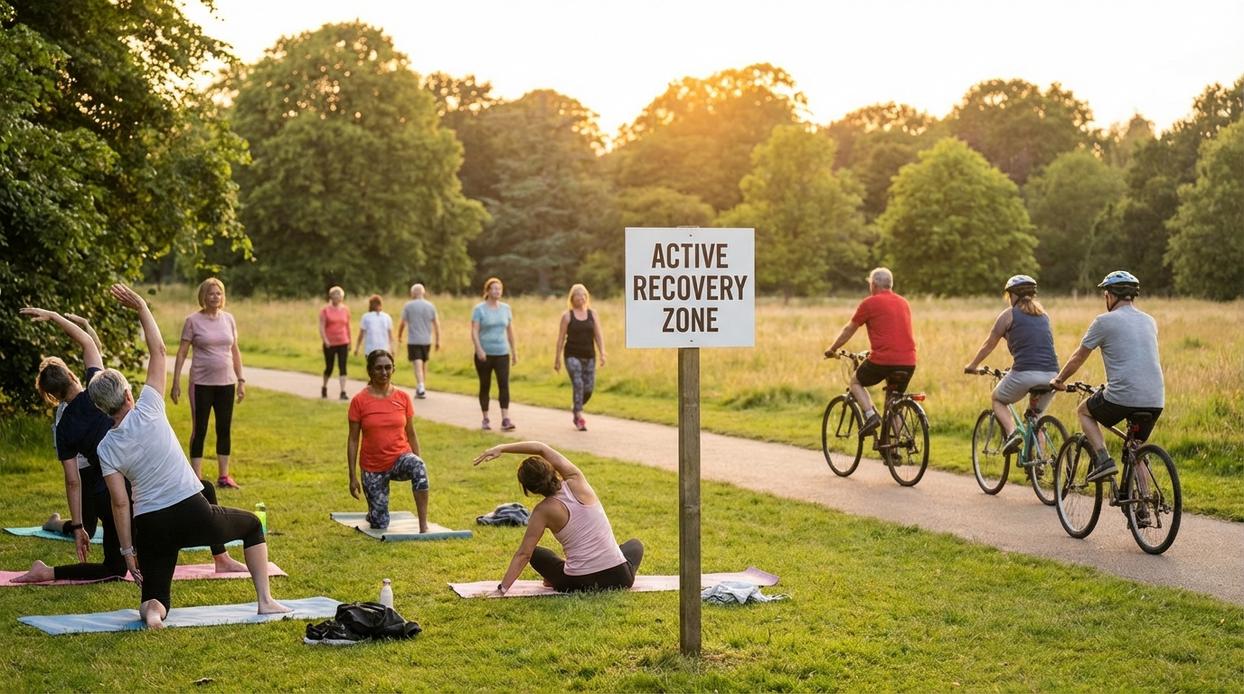
Saturday: Extended Active Recovery (45 minutes)
A brisk outdoor walk with crisp air in your lungs, or slow-flow yoga where each stretch melts tension. Consider pairing this with proven breathing techniques to reduce stress and improve performance.
Sunday: Passive Rest
Total rest or a casual stroll. Quiet. Reset.
Progress isn’t louder—it’s smarter.
Daily Fitness Efficiency Hacks for Seamless Recovery
Most people treat recovery like a luxury. It’s not. It’s the multiplier.
Here’s the contrarian truth: more intensity isn’t the answer—better transitions are. Instead of chasing soreness (as if pain were a badge of honor), tighten up these daily resets.
-
The 10-Minute Cooldown
Immediately after training, walk or jog lightly, then use static stretching for worked muscles. This shifts your nervous system from “fight mode” to repair mode. Skip it, and you’re bottling up fatigue. -
The Desk Reset
Every hour, stand and move for 60 seconds—torso twists, lunges, shoulder rolls. Sitting isn’t the villain; staying frozen is. -
The Evening Wind-Down
Before bed, try gentle stretches or foam rolling. Better sleep equals better muscle repair. -
Hydration + Nutrition Timing
Recovery accelerates when fluids and protein follow training promptly. Pair this with an active recovery training plan for compounding gains.
Small inputs. Outsized returns.
Make Recovery Your Most Powerful Movement
You came here to turn recovery into a real advantage—not a skipped step or a passive rest day. Now you have the principles, exercises, and structure to transform it into an intentional active recovery training plan that supports real progress.
Soreness and lingering fatigue aren’t trophies. They’re signals that your body needs smart, strategic movement to rebuild and adapt. When you use low-intensity, purposeful sessions to promote circulation and mobility, you don’t just feel better—you come back stronger, faster, and more resilient.
Start small. Pick one active recovery exercise and add it to tomorrow’s routine. Commit to it for a week. If you want consistent progress without burnout, make recovery your competitive edge—begin now.